
Whitfield Released Mugshot Sources
The correct photo source depends on the custody system. Whitfield P2C is the official local inmate and recent-arrest portal, but research did not confirm a public released-person photo gallery. A photo may appear on an entry based on local configuration and Georgia restrictions. The Sheriff's Records Division is the fallback for a lawful booking-photo request.
GDC photographs, when available, display automatically in the state offender search. That makes GDC the clearest official image source for a person who served a Georgia prison sentence. It does not guarantee that a Whitfield County jail photo exists online. Registry photos are narrower still and apply only to a person legally required to register.
| Channel | Photo status | Access path |
|---|---|---|
| Whitfield P2C | Not confirmed as a released-photo gallery | Check the matching official entry |
| Sheriff's Records Division | May release a lawful public copy | Open-records request with required statement |
| GDC offender search | Displays a photo automatically when available | Search the state offender record |
| GBI or Whitfield registry | Photos for registered persons only | Use the official registry |
| News or social post | May show incident image | Context only, not release proof |
A commercial copy should never replace the originating record. No commercial mugshot publisher or pay-to-remove service is linked here.
Whitfield Mugshots Do Not Prove Release
A booking photograph records appearance near the time of arrest or intake. It does not show whether bond was posted, charges were dismissed, a sentence ended, or a transfer occurred. The P2C Recent Arrests catalog is likewise an arrest source, not a recent-release list.
For release confirmation, use the P2C inmate entry, the Sheriff's release record, the Whitfield court docket, or the receiving agency. A person absent from the live roster may have been released to the community, moved to GDC, transferred to another county, or handed to a federal agency. The photo cannot distinguish those outcomes.
The Whitfield County released-inmate search covers the linked release and court records. Keep identity confirmation separate from assumptions about the case or the person.
Request a Whitfield Booking Photo
Georgia's Open Records Act provides a process for requesting existing public records, but a booking photograph has added restrictions. O.C.G.A. § 35-1-19 limits law-enforcement publication and requires a requester to affirm that the photograph will not be used in prohibited pay-to-remove publication. The agency can assess whether the requested record is public and what redactions or limits apply.
- Identify the person with a full name, booking date, and booking or case number when known.
- Use the Whitfield County open-records form or contact the Sheriff's Records Division at 706-278-3029.
- Describe the existing booking photograph and related booking entry. Do not ask the office to create a new report.
- Provide the statutory statement confirming compliant use of the booking photograph.
- Review the agency's response, any lawful fee estimate, and any cited exemption before paying for copies.
Georgia agencies generally must respond within three business days under O.C.G.A. § 50-18-71, though that response may give a production schedule rather than the record itself. Purpose-neutral reasons include matching the right booking record, correcting an inaccurate online entry, personal or family knowledge, and a legal or court process.
Note: A records response may deny or limit a photo even when other booking fields remain public.
Georgia Limits Whitfield Mugshot Publication
Georgia law does not treat booking photos as a free, universal web gallery. Arresting agencies generally may not post them online except for listed purposes. The law also addresses requests that could feed sites which charge people to remove a photo. Those rules explain why an official booking record may exist while no county mugshot page appears.
The approved manifest image below shows the statutory source. Read Georgia's booking-photograph restrictions before making or reusing a request.
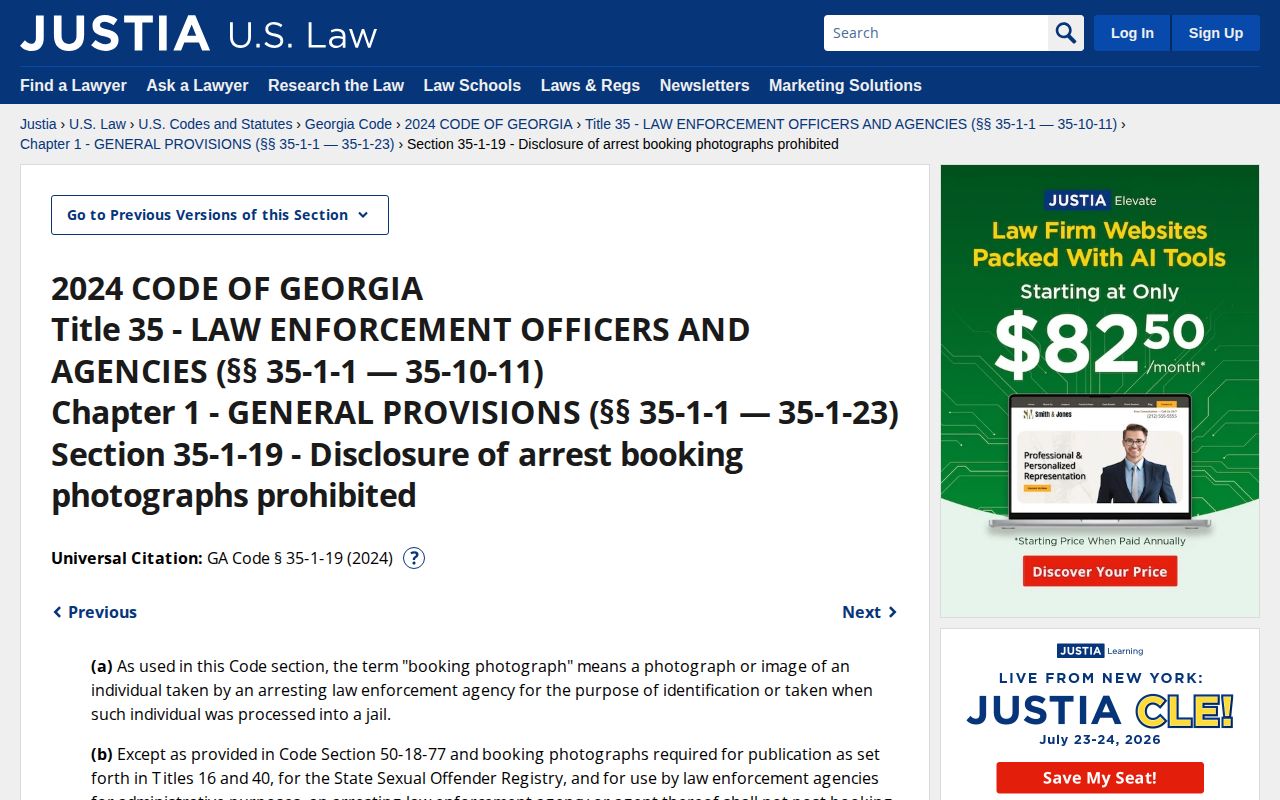
The statute is why the absence of a public image should not be interpreted as proof that no booking occurred.
A qualifying person may also have a remedy when a commercial site displays an old image. Georgia's Attorney General explains that O.C.G.A. § 10-1-393.5 can require no-charge removal within thirty days in listed circumstances, including restricted records, dismissal, acquittal, and certain cases that were not prosecuted.
Whitfield Mobile Mugshot Access
No separate Whitfield sheriff release app was found. The county describes P2C as usable from a computer, tablet, or phone. That mobile-friendly access should not be misreported as an app-only mugshot feed or a rolling release gallery.
The Sheriff's page also links a social account, and local news may publish an image in reporting about a specific case. Those posts are incident context. They may be old, may use a prior image, and do not establish the current release status. Confirm custody through P2C and the release event through the Sheriff's record or court.
Georgia VINE provides a mobile notification layer for custody changes. It is not a mugshot archive, and no photo in VINE should be assumed to be the county's booking photograph. For a same-day local custody check, the Released Last 24 Hours page explains why Whitfield's P2C tools are not a confirmed release feed.
GDC Photos After Whitfield Release
A Whitfield arrest can lead to a state prison sentence and a GDC record. The GDC offender search states that photographs, if available, display automatically. Search by reliable identity fields and compare the offense and custody history before deciding that the result belongs to the same person.
GDC is a state-prison source, not a county-jail booking archive. It may retain a public offender record after release or discharge, while a short Whitfield jail stay may never produce a GDC entry. Conversely, an old GDC photograph may not match a later county booking image.
When accuracy matters, GDC directs users to verify information through Inmate Records and Information, PO Box 1529, Forsyth, GA 31029, or 404-656-4661. The release date, status, and facility fields carry more weight for release confirmation than the presence of a photograph.
Whitfield Registry Photos Are Limited
The GBI public sex-offender registry and Whitfield's official P2C registry may display photographs. These systems cover only people subject to registration under Georgia law. They are not general released-inmate or mugshot databases.
The approved registry screenshot comes from the manifest's successful, subject-matched capture. It should be read within that limited purpose.
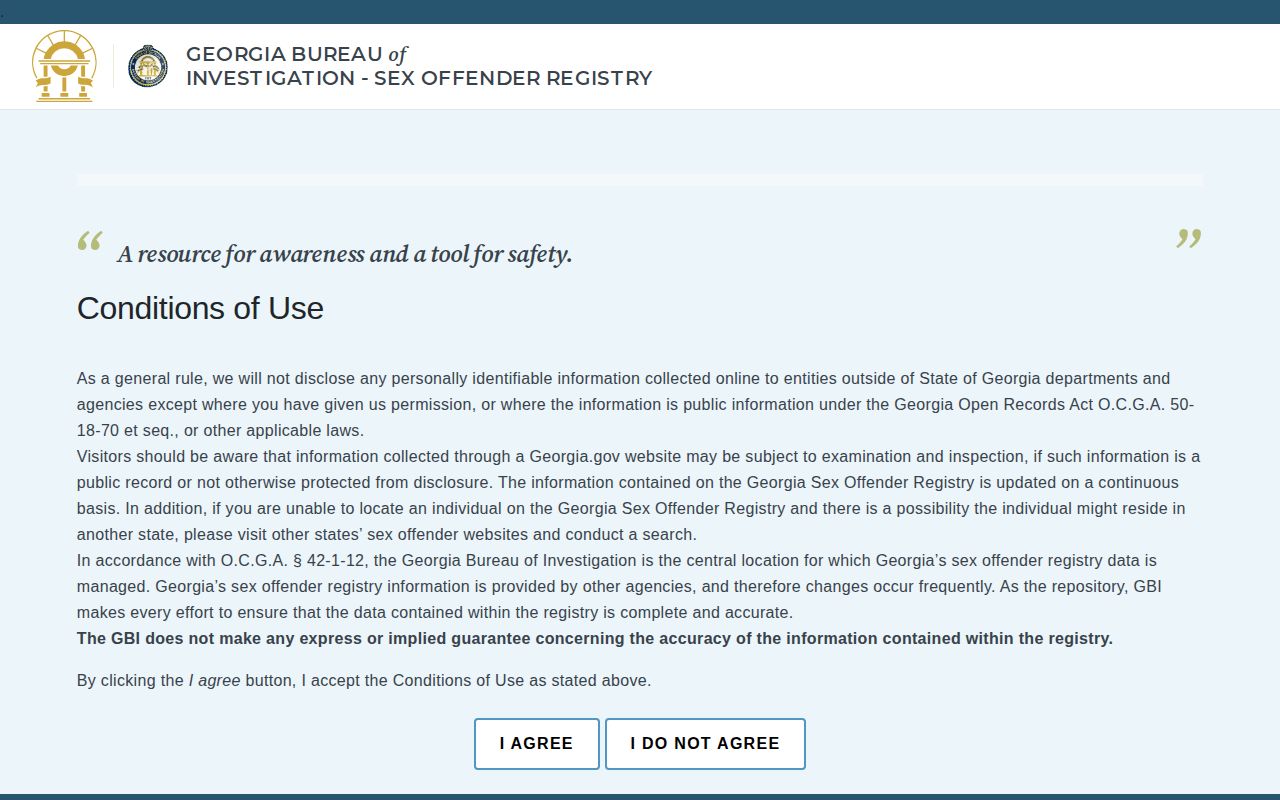
A registry image and address reflect registry reporting, not the complete jail release record. GBI warns that data is supplied by other agencies and changes frequently.
Do not search the registry merely because a person was arrested or released. Use it only when there is a valid reason to check registration status and verify the entry against official identifying data.
Correct Whitfield Mugshot Records
When a photo is attached to the wrong person or an old disposition is missing, begin with the source. Ask WCSO to review a county booking entry, GDC to review a state offender record, or the court clerk to provide the controlling disposition. A screenshot of a third-party page is not a substitute for the official case result.
Georgia uses record restriction and sealing procedures rather than assuming all records vanish after release. The Sheriff's Records Division assists with expungement matters, while the court record shows dismissal, acquittal, or sentence disposition. Juvenile and legally restricted records can be unavailable to the public.
The Georgia Attorney General mugshot page explains the commercial-site removal process and qualifying events. It does not guarantee deletion from every government record. Preserve the official disposition, send a precise correction request, and avoid paying a publisher that claims it can change a government file.
Verify Whitfield Photo Identity
Names alone are weak identifiers. Compare the booking date, arresting agency, case number, and date of birth where lawfully displayed. A common name can link the wrong photograph to the wrong release event. Spelling variations and aliases can also hide a valid official match.
The Whitfield court search warns users to try spelling variations and makes no guarantee about online accuracy. When a photograph and court result conflict, contact the Sheriff's Records Division and the clerk for the original records. Do not infer guilt, current custody, or active supervision from a booking photo.
Compare the image only with official descriptive data attached to the same record. A later photo can differ because of age, hair, lighting, or image quality. Those visual differences do not resolve identity on their own. Booking and case identifiers provide a firmer link between the photo, arrest event, and disposition.
Keep the source URL and access date with any saved image. Public pages change, restricted records may be removed, and an agency can correct an error. The record that created the photograph remains the best point for verification.
Public Record Search
Sponsored Results